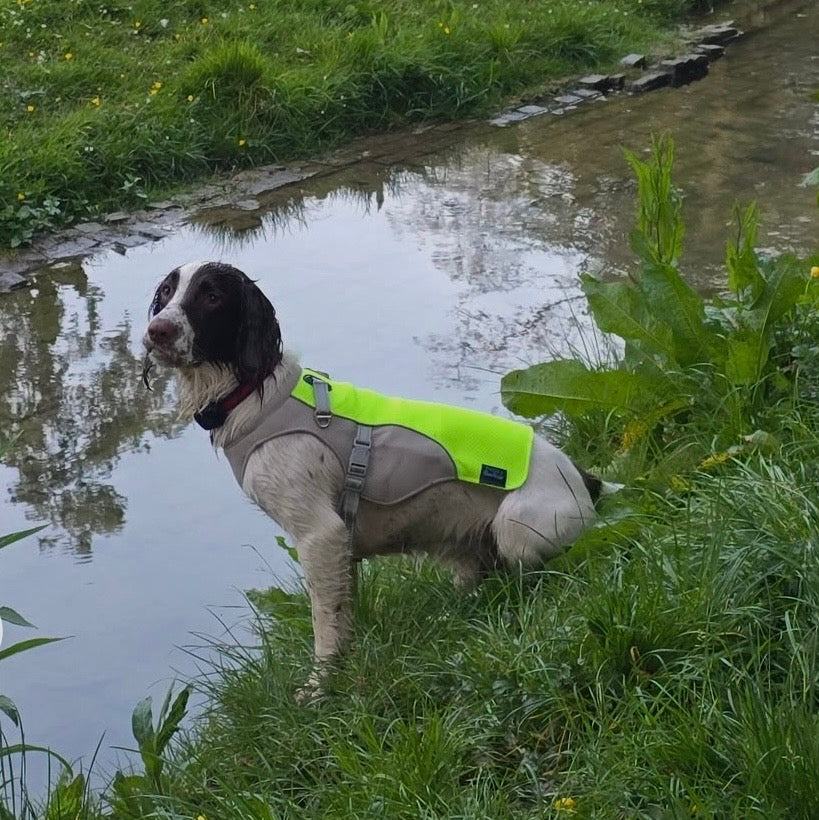
British dog walks are rarely clean and dry for long. One day it is warm, sunny and your dog is diving into streams or paddling in the sea. The next, it is cold, muddy and raining sideways.
That is why wet dogs are not just a winter problem. Whether it is summer water play, beach trips, rainy walks or muddy woodland routes, the right dog coat can make life easier before, during and after the walk.
For active dog owners, two products are especially useful: a dog cooling coat for warm weather and a dog drying coat for after wet walks. In colder, wetter months, a waterproof dog coat can also help keep your dog drier while they are out exploring.
Wet Dogs in Summer
Summer does not always mean dry dogs. In fact, many dogs end up wetter in summer than they do in winter.
Think about:
- Beach days
- River walks
- Paddling pools
- Garden play
- Camping trips
- Warm-weather walks after rain
- Dogs rolling in wet grass
A wet dog in summer is usually part of the fun. The problem is what happens afterwards. You still have the car, house, tent, campervan or pub stop to deal with.
That is where a dog drying coat earns its place. After swimming, paddling or getting caught in a summer shower, a drying coat helps absorb moisture from your dog’s coat and keeps the mess more contained.
For summer days where your dog is out walking, playing or travelling, a dog cooling coat is a different tool for a different job. It is designed for warm-weather use and is usually soaked in water, wrung out and worn while your dog is active outdoors.
A simple summer setup is:
- Use a cooling coat during warm outdoor activity.
- Use a drying coat afterwards if your dog is wet from water, rain or damp grass.
- Keep a dog water bottle in the car or walking bag for easy hydration on the go.
This keeps your dog gear practical rather than complicated. One coat is for warm-weather cooling. One coat is for drying after wet adventures.
Why a Dog Drying Coat Is Useful in Summer
A dog drying coat is not just a winter product. It can be one of the most useful pieces of summer dog gear, especially if your dog loves water.
After a swim, paddle or wet walk, a drying coat helps reduce the amount of water your dog shakes over the car, sofa or campsite. It is also much easier than trying to towel-dry a wriggling dog properly every time.
It is especially useful after:
- Beach walks
- Lake or river trips
- Wet grass walks
- Camping weekends
- Garden hose-downs
- Post-walk rinses
For owners of active dogs, this is the practical benefit: less mess, quicker drying and a more comfortable journey home.
Wet Dogs in Winter
Wet dogs in winter are a different challenge. The walks are colder, the rain is heavier, the mud is worse and dogs often come home soaked through.
This is when a waterproof dog coat becomes more useful. A good waterproof dog coat is designed to be worn during the walk, helping protect your dog’s body from rain, mud and wet weather.
A dog drying coat then works after the walk, once your dog is back in the car, home, tent or boot room.
So the winter setup is simple:
- Waterproof coat for the wet walk.
- Drying coat for afterwards.
- Clean, dry dog before they settle down indoors.
That combination is much stronger than relying on one coat to do everything.
Waterproof Dog Coat vs Dog Drying Coat
A waterproof dog coat and a drying coat are not the same product.
A waterproof coat is for wearing outside in rain, wet grass and muddy conditions. It helps keep more of your dog’s coat protected while they are moving outdoors.
A drying coat is for after the walk. It helps absorb moisture and keeps your dog covered while they dry off.
Here is the simple difference:
| Product | Best Used For | When To Use It |
|---|---|---|
| Dog cooling coat | Warm-weather outdoor activity | During summer walks or outdoor play |
| Waterproof dog coat | Rain, mud and wet winter walks | During the walk |
| Dog drying coat | Wet dogs after walks, swimming or rinsing | After the walk |
Trying to use one coat for every job is where people get it wrong. Cooling, waterproofing and drying are separate needs.
Wet Dog Gear for British Weather
The reality is that British dog owners need gear that works across changing seasons.
In summer, wet dogs usually come from water play, swimming, camping, beach trips and warm-weather adventures. A cooling coat and drying coat make the most sense here.
In winter, wet dogs usually come from rain, mud, cold grass and long damp walks. A waterproof dog coat and drying coat are the better combination.
That is why active dog owners often build a small dog gear kit rather than relying on one product all year.
A strong year-round setup would include:
- A dog cooling coat for warm days
- A dog drying coat for after wet walks
- A waterproof dog coat for rainy winter walks
- A dog water bottle for summer walks, travel and days out
It does not need to be complicated. The right product simply needs to match the job.
Choosing the Right Coat for the Season
For summer, choose lightweight, practical gear that is easy to use on walks, trips and days out. A cooling coat should be simple to soak, squeeze and put on. A drying coat should be easy to pack, easy to wash and useful after any wet adventure.
For winter, focus on coverage, weather protection and practical drying afterwards. A waterproof dog coat helps during the walk. A drying coat helps afterwards.
The best dog gear is not about having the most products. It is about having the right ones for the walks you actually do.
Final Thoughts
Wet dogs are part of owning an active dog in the UK. Summer brings paddling, swimming, wet grass and beach trips. Winter brings rain, mud and cold-weather walks.
A dog cooling coat, dog drying coat and waterproof dog coat each solve a different problem.
For warm weather, think cooling and drying.
For wet winter walks, think waterproofing and drying.
That is the simple way to build a practical dog gear setup for every season.